Feeds
Artikel
Kommentare

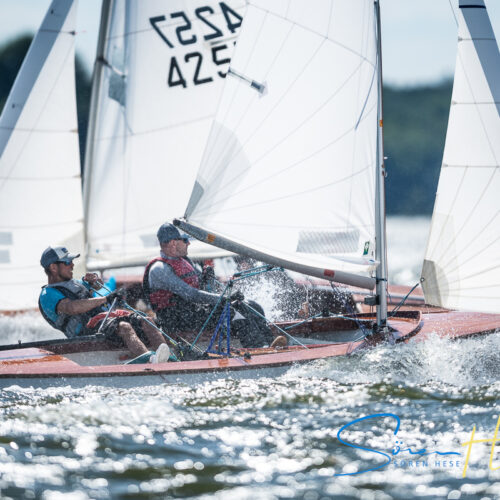
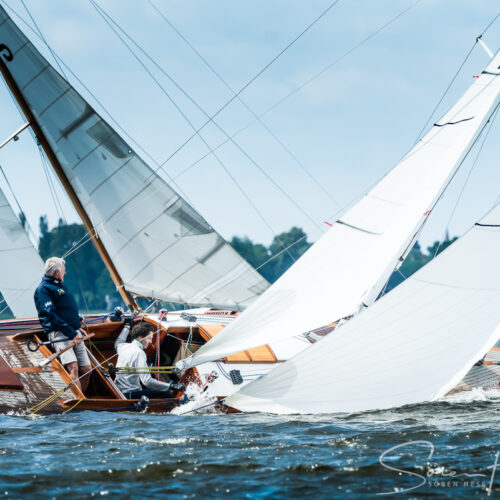
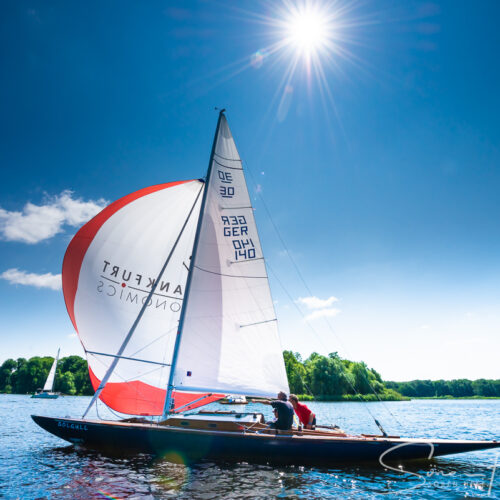
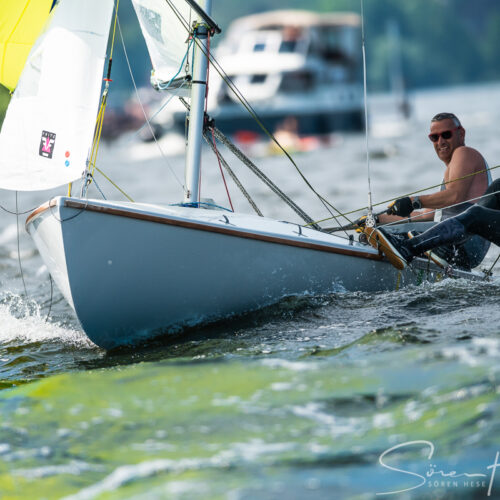
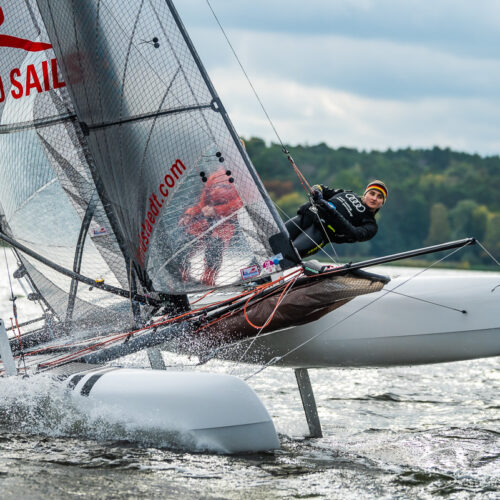
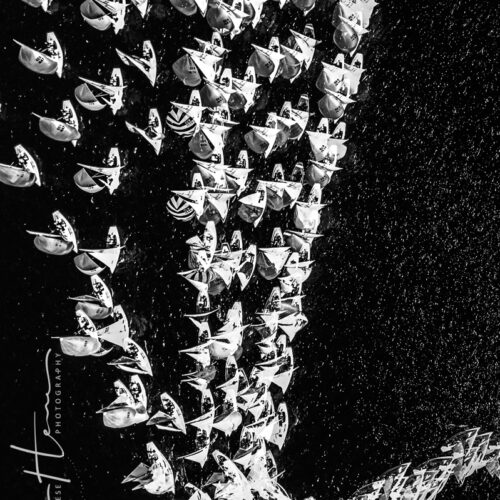
Die Bilder zum Max Oertz-Preis sind nun online.

http://soeren.zenfolio.com/maxoertz13

Die Bilder vom Opti Pfingst-Festival dann in den nächsten Tagen. Leider alles etwas ohne Sonne. Nachdem der Sonntag ja Flaute und 14h Sonne brachte  gabs halt Montag dann 4-5 Bf und 0-h Sonne. So ist das manchmal. Immerhin hat es am Nachmittag aufgeklart. Das war aber für den Max Oertz-Preis etwas spät. Die schnellsten Boote haben ja nur 3 Stunden gebraucht. Die Ergebnisse sind auf den Seiten des ASV online.

Blog_SMH-20130520-6093285-83721

Blog_SMH-20130520-6093285-83659

Blog_SMH-20130520-6093285-83789

Blog_SMH-20130520-6093285-83766


Max Oertz-Preis 2013

Schöner Wind zum Max Oertz-Preis des ASV in Berlin, nur die Sonne ließ sich kaum blicken. Mehr davon am Dienstagabend in der Galerie von www.sailpower.de.

SMH-20130520-2016338-8932

SMH-20130520-2016338-8951

SMH-20130520-6093285-83668

SMH-20130520-6093285-83675

SMH-20130520-6093285-83778

SMH-20130520-6093285-83691

Max Oertz-Preis

Sieht nach recht guten Wetterbedingungen für den Max-Oertz Preis des ASV Berlin  am Pfingstmontag aus und die Meldeliste ist auch ordentlich. Zumindest die Windbedingungen sollen ja nun nach dem windstillen Pfingstsonntag stimmen.  Impressionen dann bald auf diesen Seiten – mtk.

Sören

Die Segelsaison in Berlin startet ja doch erstmal recht durchwachsen – wenig Wind und pünktlich zum WE auch dunkel winterlich beim WannseePokal. So ist ja mal Zeit etwas an den Teleconvertern zu feilen. Normalerweise sollte man ja keine Teleconverter kombinieren. Die modernen TCs sind jedoch derartig gut geworden, dass man das durchaus mal probieren kann: im Bild unten der Mond mittels 300 mm f2.8 + TC20eIII + TC14eII und stärkerer Crop vom D800 Sensor. Die Auflösung ist aber ganz ordentlich, wenn man auf f11 abblendet. Das Ganze ergibt eine 900 mm Optik und per 1.5 APS-C crop dann für 15 MP auf der D800 ein 1350 mm Äquivalent. Gar nicht so übel. Scharf fokussieren geht allerdings nur noch per Lifeview, da die Kombination aus irgendeinem Grunde immer etwas falsch liegt. Wer das nachmachen will muss aber am objektivseitigen Mount des TC14e den Sperrnippel wegfeilen. Der verhindert nämlich genau solche Kombinationen. Das macht man am Besten mit einem Dremel und bei demontiertem TC-Lensmount.

Moon on 300mm+TC20+TC14

Moon on 300mm+TC20+TC14

Some (somewhat surprising) findings from shooting with the D800.

Did about 2000 exposures with this camera lately. Mostly LBIF (large birds in flight) and snowy : ) landscapes and Kids and the 36MP definitely deliver nicely.  Though I found myself shooting often in 1.2x crop mode and one of the surprises is buffer capacity there.

Surprise: THE BUFFER:  in RAW 12Bit lossless compressed 1.2x crop the camera writes like hell to the card. The D800 gives r18 with this setting on the display (means: expect 18 shots before buffer is full – with Noise Reduction and other extras set to OFF) . But if you really use the full buffer you end up with 26-35 NEF exposures before the buffer is full. This is likely due to the fast write to the Lexar 1000x cards. Even under a full buffer situation the camera manages to write 2-3 fps to the card directly (until you reach 100 exposures!). So overall the buffer with the 1.2x crop mode (25MP RAW 12Bit files) is pretty impressive. That is much much better than with the D3 but will definitely depend on the card type you use. These figures above come from using a Lexar 1000x 32GB CF card. With a SD 16GB  (class 10)  SDHC card the buffer is much smaller.  As the lossless compressed NEF format generates file sizes depending on the amount of details in your subjects/scenes  the results depend also on the amount of local spectral variance you capture and therefore the final buffer size will vary. With a low (micro)contrast scene I managed to put approximately 40! RAWs into the buffer. In fact the buffer is smaller but the camera writes part of the buffer to card within the full speed sequence.

After all yes I do find 5fps somewhat limiting sometimes but this is partly compensated by the quicker AF-C 3D/51 system. The AF system is clearly a step above the D3(s)/D700 system and initial AF lock (starting up from the camera in power save mode) is much faster than with the D700 and AF-C 3D is much better in locking on specific details. Battery performance is a piece of frustration if you come from the EN-EL4a cameras. So you will want to have some spare batteries with you (MB-D12 helps). In terms of high ISO performance imo the noise is comparable to the D3/D700 series – but you can nicely downscale to 12MP and you receive a slightly cleaner image  compared to the D3/D700 data (only if you play all whistles in Adobe LR for Noise Reduction before downsampling).

Sportsfinder 1.2x Crop Mode: The different crop modes are imo very handy to switch to different overview modes for faster shootings. Especially the 1.2x crop mode mimics the sports finder as you can easily see what enters your frame in a second, the additional buffer gives a lot of headroom if needed and 25MP is enough in these situations (though 8fps would be perfect for that crop mode). And the wider 35MP version is easily activated with the FN button at the front of the camera. So from an ergonomically point of view this camera is very fast to use. There only is this “we are used to 8fps” thing from the D700 that makes the whole D800 speed issue so complicated. I also cannot confirm a slow review of pictures with the D800. Scrolling is very fast, there is no delay when zooming into photographs even with 35MP full res NEFs – this works without any hiccups – note however that the Lexar 1000x 32GB is the fastest card avail right now (to my knowledge) for the D800 (compare with Rob Galbright card performance database), so the speed experience might be a different one with slower cards (especially slower SD cards).

Needed and expensive … Lexar1000x CFs

Rapid EasyISO switch: on the D800 models you can activate EasyISO and this makes changing ISO values as quick as changing aperture values in A Mode (ISOs are set with the thumb on the back wheel, aperture is set with the front wheel than).

Some Minor complains:

Battery door is too flimsy, slightly green tint on the back LCD compared to D3(s)  (will let Nikon fix that – the last April’13 firmware release did not fix that, and NO: Liveview hue calibration wont correct the problem), red AF Sensor highlight cannot be combined with greyed out crop visualization in the viewfinder , additional battery pack doesnt give the speed boast, battery door doesnt seem to be sealed enough (can be easily fixed with some glued rubber seal), battery performance is a bit on the low side compared with a D3 (though likely pretty good if you combine with the MB-D12 and EL18), the overall shape of the D700 fits better into my hand – ergonomically this is a step back but your mileage may vary – this is subjective. Overall the shape of the body is to much compressed imo. The front buttons and dials are sitting very close together and its pretty frustrating to open the 10pin connector cap when a large lens is mounted. Try this with gloves on – likely impossible to do. I just would have preferred they kept the D700 body form and layout.

Lenses: You will have to reevaluate what lens is a performer, but to sum things up the recent f2.8 pro lenses work very well and deliver crisp sharpness. But my old 70-200 AFS now shows lots of CAs – easy to correct in Post but the sensor is demanding. I tend to close the aperture for critical sharp exposures one more stop now – therefore it helps to know where the best aperture of your lens sits. The Nikkor 20 mm f2.8 AIS performs somewhat disappointing and repeats my feelings from the D3. The wide angle lens situation is the most problematic with the D800. One should upgrade to the most recent optical designs. Those that take technique serious will love to see how it pays to use MLU and a cable release.  So yes if you are willing to work on your habits – this is the right tool. Should have been sold by Nikon together with the dedicated RRS L-plate because you will need that one definitely with this camera.

Overall: the D800 is a very powerful and speedy package (if used with the fastest CF cards available) and provides a variety of options to create various file sizes – though unfortunately without any RAW binning options. I am looking forward to put the camera through its paces on the water soon. The data-space-need complaints on the net are exaggerated imo, most of the recent new cameras use 24 MP sensors and lossless compressed formats give all the freedom to reduce the file size (if wanted). If you are working with 2-3 year old computer system and have some TB external disc space you will likely be in no hurry to change the setup – although be prepared that the workflow slows down. The most recent D800 firmware release seems robust and so far I have no operational problem.

Nikon D800 with RRS L-plate attached.

Best documentation on the net is imo (and in that order):

Thom Hogans Site and Review (and especially his eBook)

NikonGear D800 Forum

PhotographyLife.com Review of the D800/e

DPReview on the D800/e

Some recent shots with the D800:

With shaved Nikkor 10.5 mm  f2.8 ED


Nikkor 70-200 f2.8 MkI @200mm @f8 – Teufelsberg ehem. Abhörstation
Subset from above.
Higher Res. subset from above
Full resolution subset from above.

The Nikon D800 arrived at my door steps some days ago. As a late adopter none of the classic problems whatsoever (no left sensor issue, 10pin seems sturdy so far, no freezing of the software). Serial is 6097xxxx. Will do some testing at the next weekend (Eastern). Might be the next illusion of “the last camera” we buy. But first impressions are very good. With a Lexar 1000x the buffer seems to be ready as fast as with the D3. But compared to the D700 the ergonomic changes are a head scratcher. Mmh wait … the pixels, yes sooo plenty  - resolution at service. But I have more to comment in a week or so.

So long, Sören

Some “work of art” stuff:


Nikkor AIS lenses on FX

Some of the old Nikkor lens legends seem to work very well on the digital FX format. Here is summary of some findings just collected from my digital notepad:

*** Nikon 50 mm f1.2 AIS on D3 FX *** :

Perfect handling due to well damped focus construction, big and heavy but very solid classic Nikkor AIS build quality with extremely tight tolerances and a pleasure to use, unfortunately strong spherical aberrations that make the lens a bit difficult to use with point light sources in the night.

f1.2: center: reduced contrast, extreme edges soft, slightly hazy, difficult to get precise focus at f1.2 without lifeview, CA low and easy to correct in LR

f1.4: center: contrast increased – slightly cleaned haze, extreme edges: soft and reduced contrast, CA low and easy to correct in LR

f2: center: contrast better, no haze anymore, nearly on par with f2,8 sharpness overall much increased, extreme edges still a bit soft, CA: low

f2.8: center very good-excellent contrast, extreme edges: a wee bit softer than f4 but fully usable, CA: unchanged and very low easy to correct in LR

f4: excellent sharpness and contrast, edges and extreme edges are clean, sharp, CA is very low.

f5.6: edges and extreme edges now also excellent, this the top performance of the lens, it doesnt get any better, very low CA easy to correct.

f16: quality deteriorates slightly, diffraction kicks in but still very acceptable performance.

Bokeh at f1.2 is special but the brass lens housing is slightly deforming the CoCs.

*** Nikon 28mm f2 AIS on D3 FX *** :

f2.0: edges soft/hazy but undistorted, center sharp but reduced contrast (hazy especially at contrasty object edges – though not as much as with the 50 mm f1.2 AIS @f1.2),

f2.8: edges get better, extreme edges still soft, center already excellent, overall much much better than at f2.0,

f4.0: extreme edges still a wee bit soft, corners sharp, center excellent,

f5.6: nearly on par with f8: excellent,

f8: maximum performance but very close to f5.6

Very good usable for landscapes with f4, for wide angle /background blur macro work: f2 does it nicely

*** Nikkor 20 mm f2.8 AIS on D3 FX *** :

The weakest of the trio but so small and light …  it will stay in my bag:

f2.8: edges very soft and edge features are smeared, center with reduced contrast but sharp, here is obviously some field curvature at work

f4: edges not sharp yet but the center is excellent at f4,

f8-11: edges get sharp by f8-11 and overall excellent sharp images are rendered, BUT even the Tokina 12-24 DX performs better at 20mm f4 on FX than this Nikon 20 mm f2.8 does @f4 on FX

This is likely disappointing for a potential use on a 36MP FX body, at f11 we have reached diffraction limited land – so for landscape kind of shots this lens will not give much flexibility on a 36+MP FX sensor but is nice for these macro low depth of field kind of concepts where the main subject sits in the center.

*** Overall *** : 

The 20mm f.2.8 is the weakest of the trio but it is just so tiny compared to the big high res wide zooms and it does the closeup background blur thing so well … .

The 28 mm f2 is the best performer wide open imo. It is already great at f2.8. But I might sell it in the future for a 24-70 f2.8

The 50 mm f1.2 is a very special lens. It has so much potential for extreme low depth of field concepts but it is not so good for point light sources aka shooting stars in the night and related AND you will often get the focus point wrong – this lens is for slow work not for running kids etc. it does not really replace an AFS 50 mm.

The three lenses however form a nice wide-to-normal trilogy for creative approaches if you know about the strong aspects of the designs. Should be mentioned: the sheer quality of the strong and precise metal construction of these lenses makes you smile occasionally. The butter smooth operation is just wonderful and every lens combines nicely with the D700/D800 bodies.

Hobbit in 3D HFR?

Bin immer noch am rätseln, warum DAS Kinoevent zu diesem Jahreswechsel bei mir so überhaupt keinen dramatischen Eindruck hinterlassen hat. Eigentlich war nicht noch mehr zu erwarten von dieser Hobbit Verfilmung, tolle CGI Animationen, großartige Landschaftsaufnahmen und herrliche Details, aber irgendwie konnte ich im Berliner Cinemax in Saal7 (ein relativ großer Saal) nicht so richtig mitgehen und die Magie eines tiefen “eintauchens in eine andere Welt” kam irgendwie nicht auf. Nach vielfacher Lektüre der Bücher von Tolkien kann ich schon behaupten die Story ziemlich gut zu kennen, also an fehlendem Enthusiasmus für die Saga liegt es nun wirklich nicht.

Nach einigen ratlosen Netzweltsuchen bin ich letztens auf einen Beitrag von Vincent Laforet gestoßen und da wurde mir die Sache plötzlich klarer.  Der entscheidende Punkt “I had absolutely NO CONNECTION with the story”  gilt exakt für mein etwas beschränktes Kinoerlebnis.

Im nachhinein betrachtet: mir war eigentlich total Wurscht, wer da irgendwie in Gefahr gerät in dieser Story, da wurden hunderte Orks niedergemäht und die Zwerge sind einfach unverwundbar – mmhh. Einige schöne 3D Effekte (schwungvolle Adler – irgend jemand sacht passend: die “Fernet Branca Adler”, und die Steinriesen) sind im letzten Drittel des Filmes wirklich gelungen anzusehen.  Trotzdem: 3D HFR (High Frame Rate – 48 Bilder/Sekunde) lenkt von der Story ab – an mir ging die Geschichte völlig vorbei. Vor lauter Details hab ich irgendwie den gesamten Plot nicht mitbekommen. Hin und wieder hatte ich den Eindruck auf ein 3D-Game zu blicken. 3D HFR ist sicher nicht der einzige Faktor der dazu beiträgt, auch in der Story an sich gibt es einige Probleme. Die offensichtliche Anlehnung an die LOTR Filme über die Rahmenhandlung nimmt dem Film die Eigenständigkeit –  und die deutsche Synchronisation ist z.T. schwach. Da spricht Thorin, obwohl sich sein Mund gar nicht bewegt – vielleicht kann er ja auch Bauchredner. Sowas nervt. Ein paar glitzernde Perlen gibt es sicher (die Gollum Ring-Szene im Berg vielleicht, auch die Abschlußszene mit dem Drachen ist gelungen  - warum nicht noch mehr davon?)

Ich geb dem Film nochmal eine Chance, aber dann in 2D und OV, vielleicht klingt dann ja auch der Zwergengesang in “Misty Mountains Cold” wieder richtig.

Happy New Year!

Allen ein wunderschönes und gesundes neues Jahr 2013. Besonderer Dank an alle diejenigen, die diese Seiten in 2012 wieder unterstützt haben! 2013 wird hoffentlich ein noch aktiveres Jahr mit neuen Schwerpunkten werden.

All the best! Sören Hese

Zurück aus Mecklenburg-Vorpommern – herrliche Erntezeit, trotz etwas verspätetem goldenen Herbst hier mal einige Impressionen.


Ältere Artikel »